
The most hectic task for lawn owners is the upkeep of a neat and evenly trimmed lawn. There was a time when we relied on bulky, fuel-powered lawn mowers to get the job done, and even if you outsourced it, it was costly once in a while.
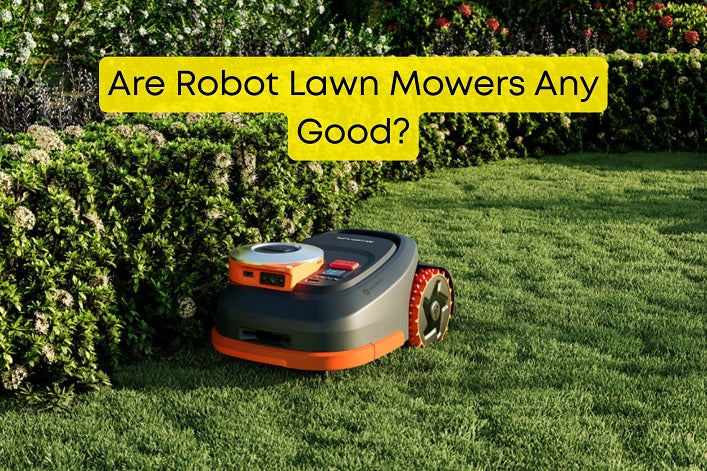
Today, technology has advanced to the point where we now have autonomous robot lawn mowers. But as with any other innovation, it's natural to be sceptical about an evolving tech. Like you, most people still question whether robot lawn mowers actually work and are good at mowing.
This article builds on facts to explain how and why robot lawn mowers are an excellent choice. We will explain how good they are and why they are the need of the hour.

Traditional vs Robot Lawn Mowers
Before we dive into the details of how good robot lawn mowers are, it's better to understand the primary difference between them and traditional lawn mowers. It will help in understanding what they are meant for and what they actually deliver.
Traditional lawn mowers run on a small engine. They always need someone to push, add fuel, and deal with the noise and smoke. Due to more mechanical parts, maintenance is also part of the job, with oil, spark plugs, and filters.

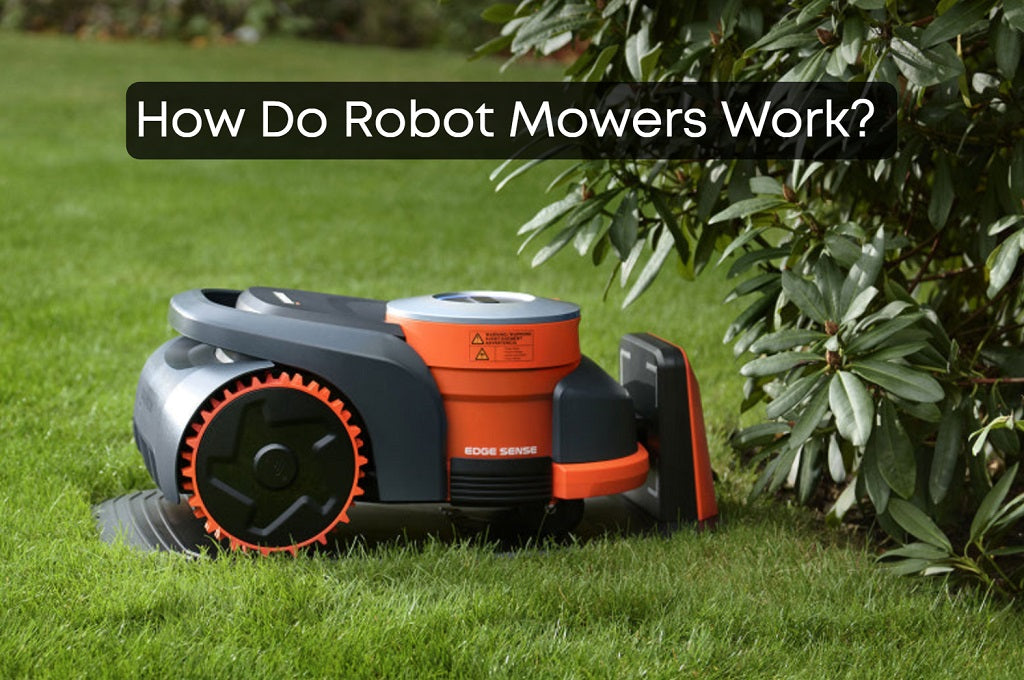
Robot lawn mowers are different. They run on rechargeable batteries and work autonomously. Initially, you have to set up the boundaries, connect them with the app, and program mowing times. After that, the mower remembers your lawn and follows the schedule by itself.
Many robot mowers also return to their charging station automatically when the battery is low and have sensors to avoid obstacles and stay within preset limits.

Simply put, traditional lawn mowers require time and effort. They do the job, but the lawn owner has to bear the hassle. In contrast, robot lawn mowers offer convenience and hassle-free mowing. They mow everything on their own, which not only saves time but also money. Most importantly, they are also good at mowing, which means they offer exceptional results.
|
|
Traditional Mowers |
Robot Mowers |
|
Principle of Operation |
Manual, engine-driven |
Autonomous, battery-powered |
|
Cost (average) |
£250 – £1,200 |
£750 – £2,200 |
|
Noise Level |
85–95 dB |
54–60 dB |
|
CO2 Emissions |
Yes |
No direct emissions |
|
Cut Frequency |
Weekly or bi-weekly |
Daily or as scheduled |
|
Maintenance |
Oil, spark plugs, filters, fuel |
Blade replacement, battery care |
|
Charging/Refuel |
Refuel manually with petrol |
Auto-charging at dock station |
Do Robot Lawn Mowers Actually Work?
The primary question of people who are interested in buying a robot lawn mower is whether they work as they should.
Robot lawn mowers can actually replace traditional lawn mowers. They can help you mow your whole lawn, from one corner to the other and one edge to the other. Once you get a robot lawn mower, there is no going back.
It offers exceptional precision. The fine blades cut grass tips cleanly and reduce the chances of tearing and uneven cuts. All you need to do is adjust the height, and it will take care of the rest.

Robot mowers offer exceptional performance. You just have to go with a reliable brand. They work in areas where traditional mowers fail. For instance, if you have a lawn with a steep slope over 20 degrees, normal mowers won't work. All traditional mowers will fail, including zero-turn mowers, electric mowers, and self-propelled mowers. However, some robot lawn mowers can even work here.
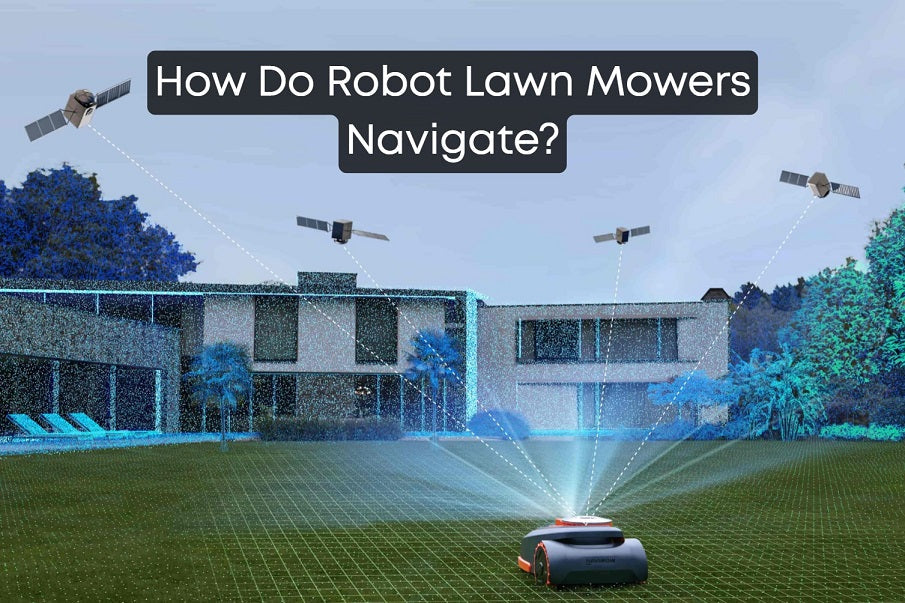
Modern robot mowers understand your lawn. They know about the trees, flowerbeds, lawn items, and even moving objects, such as animals and kids. They instantly detect the objects around and mow safely in the area. They map your whole lawn. Users can designate mowing and non-mowing areas. Thus, these mowers can precisely mow every square meter without human assistance. They use advanced navigation technologies that offer centimetre-level accuracy.

How Good Are Robot Lawn Mowers?
The earlier sections may have hinted slightly at the pros of robot lawn mowers; we have detailed that out further in this section.
Autonomous Operation
If you have used those hand-operated petrol-powered lawn mowers, you know the trouble they bring. Not only are they bulky, but operating them requires constant supervision, fueling, pushing, and dealing with fumes and vibration.
In contrast, robot lawn mowers are compact devices that you set up once (boundary wires or mapping, charging dock, schedule) and then mostly forget. They run autonomously: they self-navigate, avoid obstacles, return to their charging base when battery is low, and mow automatically according to programmed time slots.

Less Air and Noise Pollution
Robot lawn mowers are powered by rechargeable batteries (mostly lithium-ion), so during operation, they emit zero direct emissions. There is no burning of fuel on site. They are environmentally friendly. This contrasts sharply with petrol mowers, which emit carbon dioxide (CO₂).
No Grass Clippings
Traditional mowers often leave clippings that must be bagged, raked, or disposed of. This requires effort and is more costly.
Robot mowers instead typically use mulching, specifically micro-clipping. They cut in frequent small increments, so the clippings are very fine. These tiny bits fall back on the lawn and decompose quickly, returning nutrients to the soil.
Further reading: Mulching vs Bagging
Quiet Operation
Robot mowers are significantly quieter than petrol-powered models. Latest models, such as Segway Navimow, operate at about 54 to 60 decibels (dB), roughly the level of a normal conversation. Whereas, traditional lawn mowers can generate 95-100 dB, loud enough to disturb neighbours during a job. They also require hearing protection while operating the mower. Otherwise, it could lead to hearing loss.

Safer
Petrol-powered lawn mowers carry risks from hot engines and spinning blades. Even push and ride-on types require constant human control, which raises the chance of accidents.
In comparison, robot mowers are designed with multiple safety systems. They include obstacle detection, lift and tilt sensors that stop the blades instantly if the mower is disturbed, and emergency stop functions. Some models even come with anti-theft alarms and GPS tracking.

Weather Adaptability
It's a fact that mowers require good weather and dry grass for safe operation. Wet conditions can clog blades. And rain could make handling slippery.
Some robot lawn mowers, like Segway Navimow, are equipped with weather sensors and app alerts that pause mowing when rain is detected and resume when conditions improve. However, they come with water resistance, which ensures they can withstand tough outdoor conditions on standby as well.
Remote Control
Where traditional mowers require your physical presence, robot mowers offer full remote control through a smartphone app. You can adjust cutting schedules, check battery levels, set boundaries, and even manually steer the mower if needed — all from your phone.

Reduced Allergies
When cutting grass with mechanical mowers, large amounts of dust and grass fragments are thrown into the air, which can trigger allergies.
Because robot lawn mowers trim in very small increments and do so frequently, there is less buildup of clippings and dust. Its mulching function leaves behind fine particles that quickly settle back into the soil, reducing airborne allergens during mowing.
Grass Nourishment
Petrol-powered mowers often scalp the lawn if blades are set too low or if grass is allowed to grow too tall before cutting. In contrast, as explained earlier, Segway Navimow applies a mulching approach: it cuts grass gradually and often, leaving fine clippings that act as a natural fertiliser. This nourishes the soil, improves moisture retention, and promotes a healthier, greener lawn.
Limitations and Considerations
Besides the many benefits, there are a few points you should keep in mind while considering a robot mower.
Higher Upfront Costs
Robot mowers are more expensive than traditional options, sometimes several times the price. However, in the long run, they may prove to be a sustainable choice when you factor in reduced fuel and maintenance.
Besides, when you compare the high fee you have to pay for regular lawn mowing service, the upfront cost of a robot lawn mower is quite worth the investment.
Tech Setup
These mowers are app-driven. Although the UI is usually simple and well-explained, you still need to be comfortable with setup, connectivity, and regular monitoring.
What's Different about Segway Navimow Robot Mowers?
Although an emerging one, there's a big market for robot mowers. So, why should you consider Segway Navimow? Here's a list of unique technologies in our product range:
Multi-Zone Mapping
You can divide your lawn into zones. The mower remembers each zone and moves between them. It can skip areas you don't want to cut. This helps when you have gardens, walkways, or separate patches of grass.

VisionFence for Obstacle Detection
The mower is equipped with VisionFence™: a system of cameras, sensors, and AI algorithms that provides a 360⁰ view of the field. It can not only see objects in real time but also intelligently avoid them.
Complex Terrain Capability
Navimow mowers are built for uneven and sloped lawns. Our mowers can climb and cut where many mowers fail. There's a 14-bit magnetic positioning sensor that alters the output of the powerful hub motor, enabling it to traverse any bumpy or uneven terrain.
They maintain incredible traction on the lawn and work on difficult terrain, such as pitted surfaces, gravel paths, waterlogged lawns, etc.

Customised Controls via Navimow App
The Navimow app gives full control to the user. You can schedule mowing, set mowing height, and draw virtual boundaries. It also shows mowing progress live.
Anti-Theft with EFLS
EFLS™ stands for Exact Fusion Location System. It uses GPS and multiple sensors to track the mower's exact position. If the mower is removed from your lawn, you can trace it in the app. No boundary wires are required; instead, a virtual mapping takes care of the mower safety.
MowMentum Cutting
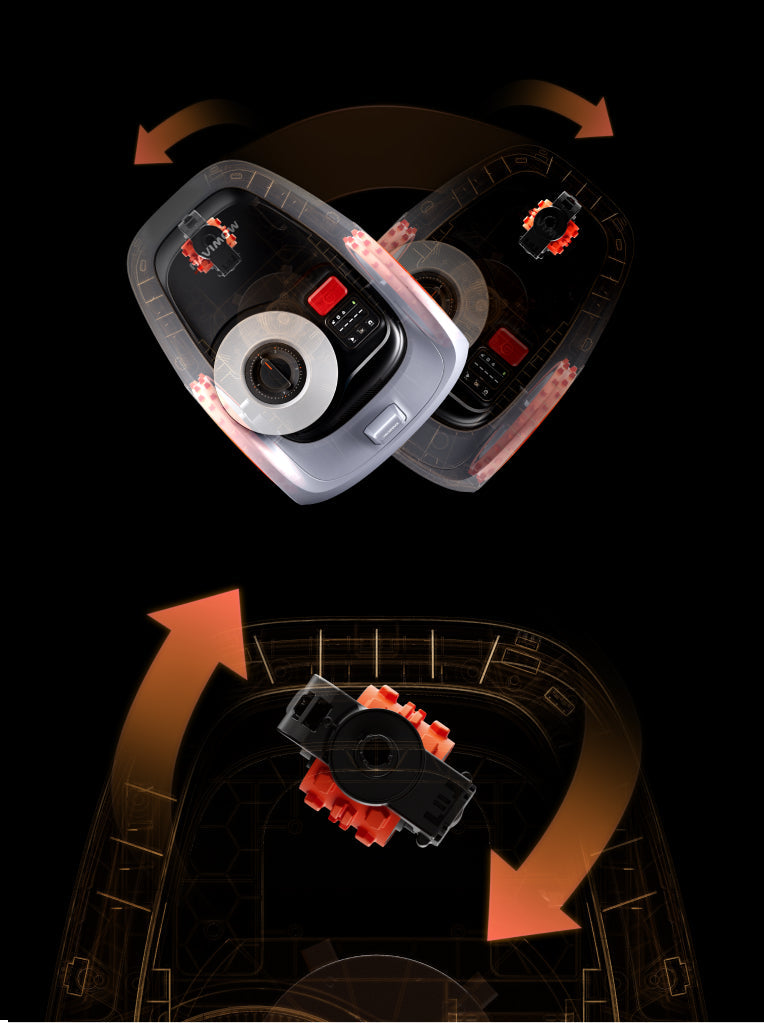
This tech tackles thick, tall, and overgrown grass that makes regular robot mowers struggle. Our series (Naimow X4) uses dual 180W cutting motors with a 43cm wide dual-disc configuration featuring 12 blades total. That gives you almost twice the cutting coverage compared to single-disc systems.
Electronic Stability Control (ESC)
A common tech in automotive engineering, but we've packed it into our compact lawn mowers. They have a continuous monitoring system that oversees everything and adjusts individual wheel speeds to maintain stable motion on any inclined terrain.
LiDAR
Navimow mowers utilise solid-state LiDAR, which is fundamentally different from older mechanical spinning systems. It fires laser pulses that scan approximately 200,000 points per second, which creates a detailed point cloud map of your lawn's geometry in seconds.

Overview of Top Robot Lawn Mowers
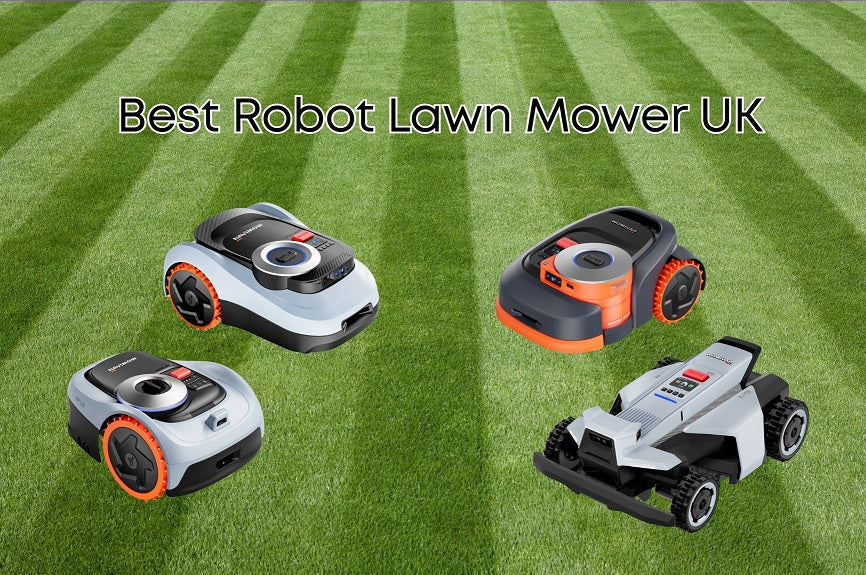
We will specifically highlight some of the top and upcoming Navimow robot lawn mowers so you can see how far this technology has progressed and what real options are available today.
Most Navimow models are even named after their core technologies. So, you may feel that this lineup sounds more like a list of autonomous vehicle features than traditional lawn equipment.
Navimow i2 AWD: The Terrain Master
Navimow i2 AWD is for homeowners who want a robot mower that handles real lawn challenges. It comes in two options: i205 for 500 m² and i208 for 800 m².
The mower features a full-time all-wheel-drive setup with off-road wheels and an automotive-style electronic stability control system. Another standout feature is Xero-Turn™ AWD, which utilises a three-wheel drive system that can handle 45% (24⁰) slopes without damaging your grass. That third wheel actually saves energy and extends runtime by about 30% compared to always-on AWD systems.

What makes it further accessible is the antenna-free setup. With upgraded tri-frequency Network RTK combined with vision technology Navimow, you can drop it on your lawn, and it maps everything automatically; no wires, cables, or base station installation headaches.
All in all, it's a good fit for mid-to-small lawns where the terrain isn't entirely smooth. Perhaps an entry-level robot mower, for those who have a small lawn space plus are entering into the robotics category.
Navimow i2 LiDAR: The Vision Navigator
As in its name, Navimow i2 LiDAR is a navigation-enhanced member of the i2 series. It's suitable for lawns up to 2000 m².
It uses solid-state LiDAR that scans approximately 200,000 points per second to create incredibly detailed maps. Unlike mechanical LiDAR with moving parts that can break, solid-state LiDAR means no fragile components.

One of the highlights is the proven use under trees. It can pass through narrow 70cm passages and works excellently, even at night, without losing accuracy. It also features an innovative GeoSketch™ Real-Scene Mapping technology, which provides a 3D top-down view of your actual lawn in the app, where you can edit boundaries just by tapping.
Same 45% slope capability as i2 AWD, advanced obstacle detection (200+ object types), and way better navigation for challenging layouts. Comparatively, it can work on more complex gardens with trees, pathways, or irregular boundaries where simple sensor sets struggle.
Navimow X4 Series: The Large Lawn Master
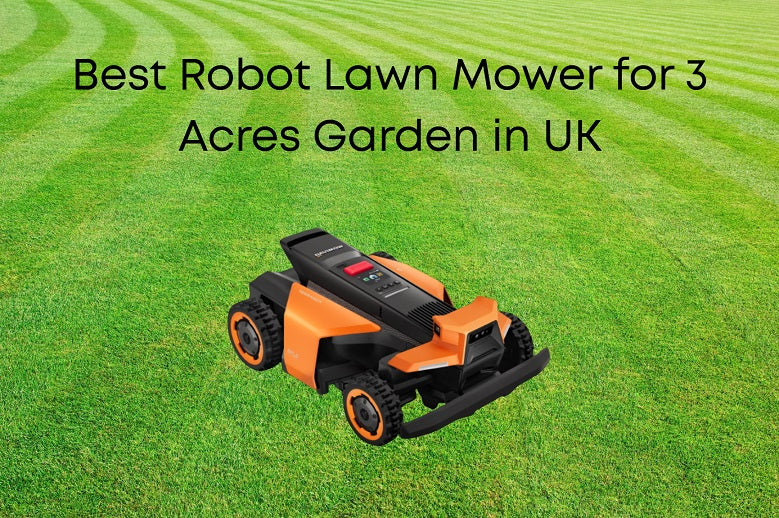
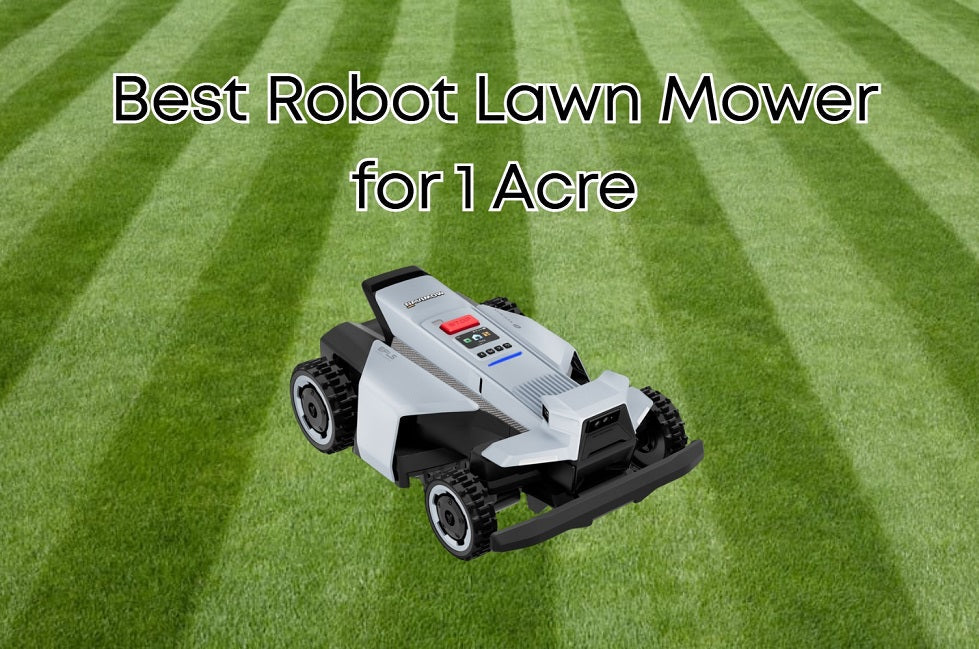
The Navimow X4 Series is a heavy-duty option in the lineup and a clear step up for larger properties or tougher grass. It's a true four-wheel drive and features dual suspension - they enable it to tackle steep inclines up to about 84% (40°).
What sets it apart is the Xero-Turn™ front-wheel zero-turn steering that prevents turf damage during tight manoeuvres. Most mowers spin their wheels and tear grass on sharp turns; this one actually steers like a car when needed.

X4 also ups the cut game with dual 180 W motors driving a 43 cm cutting width via reinforced blades, covering ground fast and evenly. There are two variants: X420 handles 2000 m², while X450 manages 5000 m², and can actually finish that in a single day thanks to its 0.8 m/s max speed.
Is a Robot Mower Good for You: When and Why Buy Them?
After going through so many plus points, it's clear that a robot mower can be one of the best options for lawn maintenance. But is it good for you? That ultimately depends on your use case, and in most situations, the answer leans in favour of the user.
A few instances where a robot mower becomes essential:
- Complex lawns: If you have a large lawn (up to 10,000 m²) with narrow pathways, slopes, or frequent obstacles, robot mowers can handle them without you pushing or steering.
- Children and pets: Safety sensors stop blades instantly when disturbed, making it safer for a lawn where kids and pets often play.
- Fast-growing grass: If your lawn needs trimming more than once a week, robot mowers keep it neat with frequent light cuts.
- Budget vs value: Although they have a higher upfront cost, they save money on fuel, servicing, and outsourced mowing over the long run.
- Tech comfort: Works best if you're comfortable with smartphones and apps for setting schedules, defining boundaries, and remote monitoring.
- Regulations: You're in a country or city that is moving away from petrol-powered equipment.
Ready to make lawn care effortless? Explore the Segway Navimow robot lawn mower series and choose the one that fits your lawn best.