
Tall fescue is known for its drought, heat, cold, shade, and high-activity tolerance. And that’s why it's a perfect option to deal with dry British summers and local hosepipe bans and keep your garden green year-round.
Despite being a tough variety, it needs extra care in the summer season. Because it’s a cool-season grass that enters summer dormancy as soon as the temperature hits 30⁰C.
Let’s see how to take care of tall fescue grass in summer. We will take you through the exact maintenance procedures and steps you need to take.
1) Mowing
Tall fescue enters partial dormancy in summer, which means it grows very slowly. You still need to mow it, but less frequently than in the spring and fall.
Mowing tall fescue is important to maintain the optimal height. If you let it overgrow, it will invite diseases. Tall grass will reduce the airflow and create a moist environment, which is favourable for fungus.
And if you stop mowing or end up mowing too much, it’s an invitation to weeds. It’s the time when different types of weeds like couch grass, creeping buttercup, dandelion, clover, or plantain grow actively. When they see any bare space or weak grass, they take the opportunity and sprout.

Keep the Optimal Height
The recommended height to mow tall fescue is 7.5 to 10 cm (75 to 100 mm). You can keep the height at 7.5 cm in the spring and autumn. But in summer, you should raise the mower deck and mow at 9 cm to 10 cm. The reason to keep the grass higher is the canopy effect. The tall grass provides shade to the soil and keeps it cooler. It reduces the evaporation rate, which is why there is more water available to the grass.
Secondly, when you mow high, you don’t disturb the lower part of the leaf blade where energy is stored. Thus, there is no energy wasted due to mowing, and the plant can survive the harsh weather and dormancy period.
While mowing the grass, you must make sure the blade is sharp enough. Dull blades can tear the grass tips and make it more vulnerable to diseases. The tips of the grass turn brown and make your lawn look horrible. A sharp blade is necessary to ensure a clean cut.
Get a Robot Lawn Mower
For most lawn owners, mowing the lawn is a big headache. Firstly, they don’t have time to mow the lawn. Secondly, they don’t like to deal with the issues of traditional gas mowers and the effort it requires. Just because of these, regular mowing of lawns is often neglected.
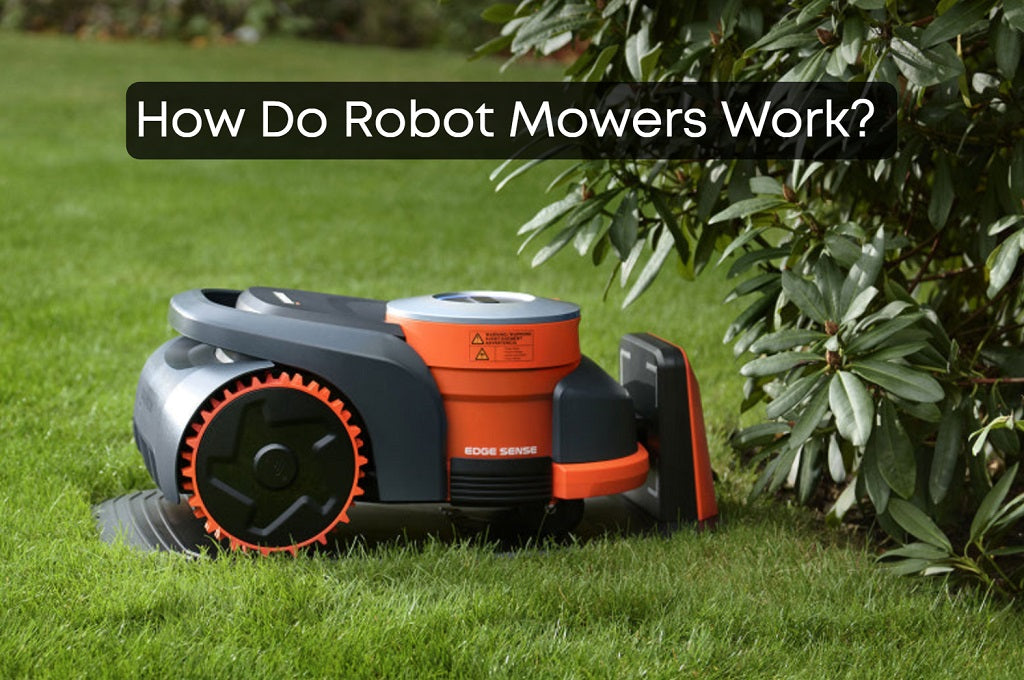
The best way to mow tall fescue in summer and year-round is by using a robot lawn mower. It automates lawn mowing and mows every area of your lawn whenever you want. You can set the time and desired height, and it’s ready to work. It keeps your lawn perfectly manicured in all seasons. The best part is that it saves you time, effort, and money.

2) Watering
Tall fescue needs more water in summer compared to other seasons. The reason is the high evaporation rate, which deprives the grass of water.
Water at the Right Time
You have to water at the right time. Ideally, early morning is preferred, between 5:00 am and 9:00 am. The air is cooler, and the sun hasn’t risen, which means the evaporation will be slow. The water you provide to the grass will reach the roots.
Do not water during the midday, as 30-50% of the water will evaporate. Watering at night is also discouraged as the soil stays wet for a longer period and invites fungus.

Provide Adequate Amount of Water
Now, the quantity of watering also matters. Tall fescue grass needs 25 to 30 mm of water per week. During hot heatwaves, it might require up to 40 mm. You can split it into two deep watering sessions. Shallow and frequent watering is not recommended, as water can evaporate quickly.
For the perfect amount of water, you must know the sprinkler rate. For that, you can place a container on the lawn. Let the sprinkler run for 15 minutes. Measure the height of the water collected. Suppose it is 7.5 mm, which means the sprinkler rate is 30 mm per hour.
If your goal is 30 mm per week, you need to run the sprinkler for one hour. You can split it into two sessions of 30 minutes each, such as Sunday and Thursday.

3) Fertilisation
Fertilising tall fescue or any cool-season grass in summer is a big NO.
Cool-season grasses are in partial dormancy. They are hibernating to survive high temperatures. They have limited energy in their crown, and that is used to preserve roots to absorb water from depth.
When you provide fertiliser to a cool-season grass in summer, you force it to grow. The grass wakes up from hibernation and starts growing tips. Its focus shifts from roots to top growth, and it spends all its energy there. It results in a weak root system, which cannot support the new growth and provide the water it needs. Eventually, the grass dies as it cannot survive the harsh conditions.
The major risk of fertilising in summer is fertiliser burn. Synthetic fertilisers are salts, and they absorb moisture from the grass blades and roots. When you spread them on the lawn, they quickly dry the grass. This process is called Osmosis.

The grass is left with no water. Secondly, it cannot absorb water from the soil as evaporation is high in the summer season. The soil dries out quickly and cannot absorb the lost water. Because of a lack of water, the internal structure of the grass fails, and the grass changes its colour to yellow.
In the worst case, the crown of the grass is dehydrated. It’s the place where the grass stores its energy. Once it is dried, the grass is dead, and there is no coming back. The grass won’t regrow in the fall. You have to reseed the lawn.
It means fertilising tall fescue in summer will result in extreme harm rather than doing anything good.
If you use a robot lawn mower on your lawn, it will do micro-clippings. This means it will finely cut the grass tips. These fine clippings can easily break down within 24-48 hours and provide free fertiliser to the lawn.
4) Pest Management
Chafer grubs are extremely common in the summer. These are the larvae of chafer beetles that live underground and feed on the root system. They eat the roots and disconnect them from the plant. Thus, if there are grubs in your lawn, they will separate the water source of the grass, which is much needed to survive summer.
When grubs are eating grass roots, the grass cannot absorb enough water. Eventually, it turns brown. So, if there are brown patches in your lawn even after watering adequately, the probable cause could be grubs.
You can do a quick carpet test. Grab a handful of grass and pull straight up. If it comes out effortlessly, it means there could be grubs underneath the soil. Dig a small hole, and you will find grubs. They stay in the top 2.5 to 5 cm of the soil. But if it does not come out, it means the grass is fine. It is actually a sign of drought.
To deal with grubs, you need beneficial nematodes (Heterorhabditis bacteriophora). You can apply them in late summer when the temperature is between 12°C and 20°C

5) Extra Care for Tall Fescue Summer
Limit Foot Traffic: Tall fescue is dormant in summer, so you should limit foot traffic as much as possible. Higher foot traffic will damage the grass and compact the soil.
Use a Lightweight Mower: A common reason for soil compaction is the heavy weight of the mower. You should opt for a lightweight mower; robot mowers are the best. It is not only beneficial for summer but for all seasons.
Provide Shade: In summer, the soil temperature is extreme. It cooks the roots of your grass. If possible, you can provide shade to the lawn through physical shade structures, trees, or mowing higher. It keeps the soil a bit cooler and reduces evaporation.
Opt for Bio Stimulants: Fertilisers aren’t recommended in summer. However, you can use bio-stimulants. For instance, liquid iron can help your lawn turn green without adding nitrogen. It provides a deep green colour without forcing growth. Similarly, Kelp provides natural hormones that help plants tolerate heat, and humic acid improves the soil’s ability to hold water and nutrients.
Sharpen/Replace Mower Blade: Sharpen the lawn mower blade every 20-25 hours of use. If you use a robot lawn mower, you just need to replace the blade every 100-150 hours of use.
Final Words
Tall fescue is a cool-season grass that needs extra care and attention in the summer season. It enters hibernation to survive extreme temperatures, which is why providing an adequate amount of water, mowing regularly, avoiding fertilisers, and controlling pests is necessary. We have explained how to take care of tall fescue grass in summer and take extra precautions to keep your grass alive and healthy. You only need to follow this special routine for summer, and your grass will start growing actively in the fall.